


My roundup of recent analytics news and ideas that I find particularly useful and/or interesting. I mostly work in the Google analytics stack and I’m a little bit obsessed with the intersection of AI and analytics.
The kintsugi of analytics
“Kintsugi is the Japanese art of repairing broken pottery by mending the areas of breakage with urushi lacquer dusted or mixed with powdered gold, silver, or platinum… As a philosophy, it treats breakage and repair as part of the history of an object, rather than something to disguise.” – Wikipedia
I was first introduced to the concept of kintsugi by a furniture-maker friend of mine. As a master craftsman, he was often asked if he could repair fine pieces of furniture. He was happy to take the commissions, and skilled enough to execute them perfectly, but he preferred to make his repairs somewhat obvious. His perspective was that repairs are a natural part of the life of a well-made object and as such they should not be obfuscated. He wanted the owner of the object to have a sense of its journey through time.
I’m starting to embrace a similar philosophy in the practice of analytics. When I was first introduced to digital analytics, I was excited by the knowability of things like daily visits, traffic sources and conversion rates. Later on, like a jilted lover, my feelings soured as I came to understand all of the limitations of data collection and interpretation – e.g. the flaws in the data we do collect and the extent to which we don’t know what we don’t know. I continued to toil away, doing my best to tell coherent stories with data. While I lived with the discomfort of uncertainty in what I was presenting, I varnished over that uncertainty in my reports, dashboards and slide presentations. I would present filtered data, or estimated data based on what I thought should be true.
As sickening as that sounds, I’m not completely free of the habit yet. Practically speaking, our stakeholders tend to want complex data reduced down to simple terms. I’m sharing more of the messy stories behind the metrics I present, but I adapt my message to fit my audience. Not everyone is ready to embrace the breakage and visible repairs.
Product Updates
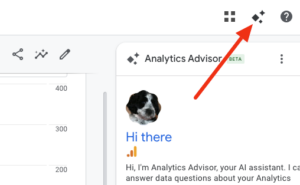
- GA4: Analytics Advisor is now generally available and can be accessed via the top bar to the left of the help icon. On the whole, I didn’t find it quite as insightful as Claude hooked up to the Analytics MCP, but it’s more convenient and does a pretty good job with analysis. I’ve had mixed results with troubleshooting and help questions. For example, I asked it to explain the difference between ‘Session source / medium’ and ‘Source / medium’, and it completely botched the answer.
- GTM has added three new built-in variables: Client ID, Session ID, and Session Number. There are several third-party tags that serve a similar purpose, but now it is a native feature of GTM. This makes it a little easier to pass these values as hidden form fields in order to take advantage of conversion imports into GA4, among other things.
- Google Optimize is Back?, Carmel Makaya
Well, not exactly. Google documentation was spotted indicating that a ‘website optimizer’ feature is coming to Google Ads. I followed the links to read the documentation myself, and it appears to have been taken down. It will be interesting to see what it ends up being. - BigQuery – SQL Just Got a Brain: Introducing BigQuery’s Native AI Functions, Ravish Garg
Three very cool new functions for classification, scoring and conditionals that rely on reasoning instead of zeros and ones. Way easier to use than the existing BQML functions.
Workflow
- Which AI Visibility Tracker is right for me? The AI Search Maturity Model, Alisa Sharf, Seer Interactive
The title is a bit click-baity, since she expressly does not review/compare tools, but the maturity model is a useful framework. Also, I didn’t know about poe.com – a handy tool for evaluating prompt responses across multiple AI tools. - Run Server-side Google Tag Manager On Localhost, Simo Ahava
Useful if you want to set up a test environment for a sGTM deployment. - How to use Google’s Channel Performance report for PMax campaigns, Mike Ryan
I’ve spent too many hours in the last year troubleshooting inflated conversion metrics coming from PMax campaigns. This is a helpful guide to understanding where your PMax investment is going, and what you are getting in return. - How Bayesian testing lets Google measure incrementality with $5,000, Frederick Vallaeys
A good overview of how Google Ads is using bayesian inference to make better decisions with less data. It’s hard for me to believe it took them this long, but Frederick Vallaeys was a long-time Googler, so he’s a pretty reliable source.
Ideas
- AI Disruption & Augmented Consulting, Peter Baumann
Some things to think about as we head into 2026. My favorite quote? “Technical mastery has shifted from writing elegant code to orchestrating a complex “zoo” of stochastic systems that no one person fully controls.” I also like his 2026 forecast on data, analytics, and AI trends. - Why AGI Will Not Happen, Tim Dettmers
A hardware-centric breakdown of why the advances we’ve seen in AI are slowing down and will continue to do so, challenging claims that Artificial General Intelligence (AGI) is near at hand.
Miscellaneous
- Your Analytics Team Is Dead Man Walking, Sven Balnojan
Specific advice for evaluating and “restructuring” analytics teams in the context of AI. I put restructuring in quotes, because he mostly means laying people off. I prefer to read the article as a blueprint for building a lean analytics function at a small or mid-sized organization that couldn’t afford an eight-person team in the first place. - Why Surprising Data Is Often Wrong: A Lesson in Twyman’s Law, Mike Cisneros
I’m including this here because it complements the previous article. A good analyst is skeptical of insights. Too often I find that flaws in data lead to spurious findings. AI is not great at second-guessing (at least for now), and tends to take the data it is fed at face value. Plus one for humans. - Generative AI Landscape 2025: The State Of Gen-AI, Similarweb
A cornucopia of stats about LLM adoption and usage. One of my favorites: the average Google query is 3.4 words; the average ChatGPT prompt is 60 words. I’m not surprised that it’s more, but that’s a shocking amount of behavioral change in a very short time. There are 37 slides in total, with all kinds of insights. - Make Things, Tell People, Abigail Haddad
Good advice for job hunters.
Nico Brooks is Two Octobers’ Head of Analytics. Want to explore how analytics could improve your marketing performance? Reach out — we’re happy to share what we’ve learned working with teams like yours.
Don’t Miss our Next Analytics Roundup
Sign up for our newsletter below to get Nico’s monthly Analytics Roundups delivered to your email box.