
A curated roundup of marketing analytics news, tools and ideas — with a focus on the Google analytics stack, and the intersection of AI and analytics.
One of the articles I share this month includes a fascinating story of a company that laid two analysts off due to AI, but also hired a new analyst with a different skillset, and ended up no more or less productive, at approximately the same cost.
So, meh in terms of key business metrics, but they also became much more resilient. Previously, a lot of institutional knowledge was trapped in people’s heads. The restructured team used AI to facilitate implementation of a knowledge management system to capture business rules and processes for analysis and reporting to stakeholders.
There’s a lot I love about this story – in particular, I appreciate how the manager of the team took the time to understand the work being done, instead of just implementing AI like a battering ram. I also think she was astute to recognize and call out resilience as a benefit. There’s a bit of a goldrush mentality with AI at the moment. Once the gold rush is over, the resilient will survive.
Read on for more studies, stories and practices related to AI and analysis work, plus new feature releases from Google and more.
Product Updates
- Google Analytics: Filter out web hostname traffic. You can now exclude traffic from GA based on the requested hostname. I have already found this very useful for excluding traffic from dev/staging domains.
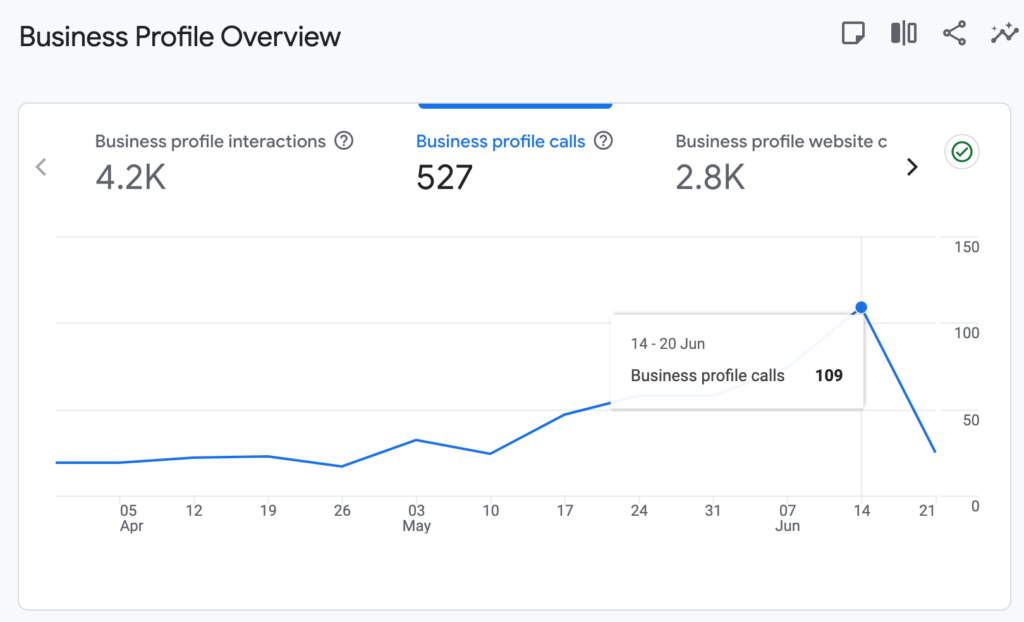
- Google Analytics: Business profile linking. See Google Business Profile stats in the GA reporting UI. Similar to Search Console reporting in GA, this is a completely separate data set from standard GA, so you can’t combine it with GA metrics and dimensions, but it’s still nice to have the data right there.
- Google Tag Manager: You can now set up Google Tag Gateway with Google Cloud Load Balancer and Amazon Cloudfront, in addition to the already-supported Cloudflare, Akamai and Fastly. Google Tag Gateway allows you to serve Google tracking scripts from your own domain, which stymies some blockers and improves tracking by 5-10%, in my experience—though I think that number is going down. It may not sound like a lot, but a 5% lift in reported ROI is meaningful, and it’s dead-simple to set up. For a perspective from the inestimable Julius Fedorovicius, check out: Google Tag Gateway: My Thoughts After One Year
- Google Tag Manager: Big-ish changes are coming—there were some hints at Google Marketing Live last month, but I’ve only seen a few cosmetic changes in the wild so far. If you like arriving at parties before the other guests, Simo Ahava gives a few previews here: Google Tag Manager UI Updates. The forthcoming event setup tool does look pretty cool.
- Google Search Console has added generative AI performance reporting. This means you can see performance metrics for how a site appears in AI Overviews and AI Mode results. So far the report only shows impressions and pages that appear, i.e. not queries and clicks, but it’s a good start.
AI-assisted analysis
- 6 LLM Prompting Techniques for Data Scientists and Engineers in 2026, Claudia Ng
There’s a lot of prompting advice out there, but this article has a very high density of usefulness for data analysts. In particular: I’ve been building AI tools for reporting and analysis within my agency, and the tip about structured outputs is game changing. The article links to OpenAI documentation on structured outputs—here are Claude and Gemini docs. - How Anthropic enables self-service data analytics with Claude, Anthropic
A conceptual architecture for building an agentic analytics solution. A lot of what they say mirrors what I’ve been reading on Medium and elsewhere, but it’s revealing to hear how many guardrails an AI company puts in place to prevent agents from wandering aimlessly and making shit up.
Attribution & measurement
- The choices that determine whether your MMM (Marketing Mix Model) actually works, Barbara Galiza and Raunak Kumar
Practical tips from someone who’s been doing MMM for a while, with a B2B tilt. The tip that’s nagging at me is, “Does a meaningful share of your conversions come from channels you directly control?” And “directly control” means you can (and do) turn it up and down at will, i.e. not SEO/AIO. That’s a DQ for a lot of the B2B clients I work with.
Ideas
- Below are a few instructive accounts of challenges with AI adoption in the workplace. I’m probably engaging in some confirmation bias, but a theme I notice is that taking away agency from employees results in good people doing mediocre work. Shocking.
- The First Company-Wide AI Ban Just Hit My Inbox. Here’s What It Means, Joe Procopio
A story of a tech company that started losing revenue due to AI slop. - Three Companies Tried Replacing Data Analysts With AI. Six Months Later, Here’s What Actually Changed, Gulab Chand Tejwani
Detailed, first-hand accounts of three markedly different approaches to AI adoption. Only one really failed. The story that fascinates me is the one that stayed flat on productivity and cost, but gained resilience. - A.I. ‘Employees’ Might Disrupt Work in Unexpected Ways, Noam Scheiber, NYT
Nearly everyone agrees that qualified humans should be “in the loop” so they can review AI work product. The problem is, we don’t feel as personally accountable when AI screws up, even if the work is under our purview.
- The First Company-Wide AI Ban Just Hit My Inbox. Here’s What It Means, Joe Procopio
- BI Is Dead, Long Live BI, Mahdi Karabiben
An argument for how AI can help us surface meaningful business questions, which the author believes is the real bottleneck in analytics today, “answering questions faster was never the hard(est) part. The real gap was always upstream: Knowing which questions were worth asking.” - Are Semantic Layers Really Necessary?, The Analytics Power Hour podcast
The APH crew talks to Jacob Matson of MotherDuck about his provocative article, Rethinking the Semantic Layer: AI Query Discovery vs. Manual Data Modeling. I really enjoyed the conversation and learned a lot, but to me it seemed like they were debating what kind of semantic layer is useful and how it should be created. The word “semantic” means “of or relating to meaning in language”. I didn’t hear anyone arguing that an LLM can make sense of a column named “custom_conversion_4” without any context. I also still believe that a semantic layer can help elucidate the messy truth of how things are actually measured.
Privacy
- State of GDPR consent in 2026: mostly broken, still, Jules Stuifbergen
A little bit of ranting and advice, followed by a free tool that checks to make sure no tags fire before a user gives consent. A basic, house-is-on-fire check for GDPR compliance. According to the author, 76% of houses are on fire.
Miscellaneous
- LLMTrack.org, Amplitude
A public LLM visibility tracker. It only tracks brands and categories related to SaaS products, e.g. Amplitude’s target market. But it’s pretty interesting if you work in or with SaaS. - AI carbon & water footprint calculator, Andy Masly
A clear-eyed take on the environmental impact of AI usage – spoiler: it probably won’t reach the top 10 list of ways you can decrease your footprint. I’m sure the calculator isn’t perfect, but I’ve read through a number of the creator’s articles, and I believe that he is sincerely trying to help people make better decisions with data.